
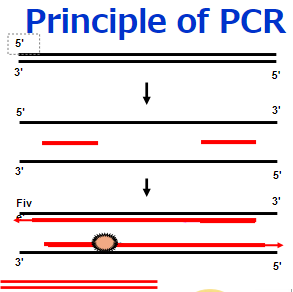
PCR stands for Polymerase Chain Reaction. It is a widely used laboratory technique to amplify or make many copies of a specific segment of DNA.
PCR involves a series of cycles, each involving heating and cooling the DNA sample, enabling the DNA to be repeatedly copied.
PCR involves repeated cycles of three main steps:
Bioinformatics tools play a crucial role in obtaining and analyzing target gene sequence data.
Primer design guidelines:
There are several types of DNA polymerases used in PCR, each with unique properties and applications:
| Property | Pol I (Family A) | α (Family B) |
|---|---|---|
| Source organism | Thermophile bacteria | Hyperthermophilic Archaebacterium |
| 3′–5′ exonuclease | No | Yes |
| 5′–3′ exonuclease | Yes | No |
| 3′ end of PCR product | + dA | Blunt |
| PCR enzyme | Taq, EmeraldAmp, etc. | PrimeSTAR, Ex Premier, etc. |
| Example of use | Standard PCR | High fidelity, Long PCR |
The primer melting temperature (Tm) is the estimate of DNA-DNA hybrid stability. Knowing the Tm is critical for determining an appropriate annealing temperature (Ta). A Ta that is too high will result in insufficient primer-template hybridization, leading to low PCR product yield. A Ta that is too low may lead to non-specific product amplification.
Calculation of the Tm of primers shorter than 20 bases can be performed using the Wallace rule:
Tm = 2°C (A+T) + 4°C (G+C)
For accurate estimation of the Tm of primers longer than 20 bases, we recommend using free primer design software such as Primer3.
The final concentration of each primer should be between 0.1 and 0.5 µM. A stock solution of each primer is typically 10–20 µM.
Primer concentrations that are too high increase the chance of mispriming, which may result in nonspecific amplification. Primer concentrations that are limiting can result in extremely inefficient amplification.
Standard desalted primers are satisfactory for most PCR applications.
Three-step PCR includes denaturation, annealing, and extension steps. This type of protocol should be used when the Tm of the primers is lower than the extension temperature or is less than 68°C.
If the melting temperature of the primer (Tm) is close to the extension temperature (72°C) or a few degrees lower, consider using a two-step PCR protocol that includes a denaturation step and a combined annealing/extension step. With this protocol, the annealing temperature should not exceed the extension temperature.
A 68°C extension temperature is preferred for two-step PCR and when amplifying longer templates (>4 kb). This lower extension temperature dramatically improves yields of longer amplification products by reducing the depurination rate that influences amplification.
72°C should be used as the extension temperature when performing three-step standard PCR and for amplification of short fragments (<4 kb).
PCR conditions:
The successful amplification of DNA is key to many technologies, whether you’re performing next-generation sequencing, cloning, or genotyping. Your PCR polymerase needs to amplify reliably regardless of your target and sample type. We developed a wide range of the highest-performing PCR enzymes and blends with optimized formulations to meet routine and challenging reaction conditions—from long and accurate PCR to fast PCR to inhibitor-resistant direct PCR.

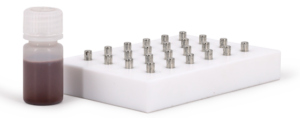
High-quality starting materials are important for the beginning of all good science. We currently offer DNA extraction kits from our in-house India manufactured brand “DTI” as well as from Macherey-Nagel brand, which is our global partner of Takara Bio for nucleic acid extraction in the bioanalysis range.

Spin Column
Magnetic Beads
DTI is the premier in-house brand of DSS Takara Bio India Pvt Ltd., specializing in manufacturing routine laboratory molecular biology products within our state-of-the-art facility, which is ISO 9001 and ISO 13485 approved.
Product offerings
MN has been a reliable partner for DNA purification for years.
Product offerings
The successful amplification of DNA is key to many technologies, whether you’re performing next-generation sequencing, cloning, or genotyping. Our large and diverse portfolio of PCR polymerases was designed for success across a variety of applications, from basic and translational research to routine laboratory testing. We create polymerases that simply work faster and better, so you can focus on obtaining the results you need.
For Routine PCR / Genotyping
For Convenient-Use Dye Plus Master Mix
For High-Fidelity PCR
For High-Yield PCR
For Long Fragment PCR
For Glycerol-Free Options
For Lyophilised Options
Accessories
DTI FabSpeed Thermal Cycler is designed specifically to enhance PCR efficiency and accuracy. It is equipped with a 7” sensitive touchscreen and a friendly graphic user interface, which makes operation highly intuitive. With flexible ramp rate and gradient temperature control, DTI FabSpeed greatly increases PCR accurate optimization.
| Brand | Catalogue Number | Description |
|---|---|---|
| DTI Brand | TCST-9622 | DTI FabSpeed Thermal Cycler |
Agarose gel electrophoresis is a widely used method in PCR workflows for analyzing nucleic acids. It helps separate, identify, quantify, and purify PCR amplicons. Selecting the appropriate products for nucleic acid electrophoresis can greatly enhance and expedite your results.
Our high-quality agarose and markers are designed to support accurate analysis, ensuring you achieve precise and reliable outcomes in your downstream applications.
DNA Ladder
Agarose Routine